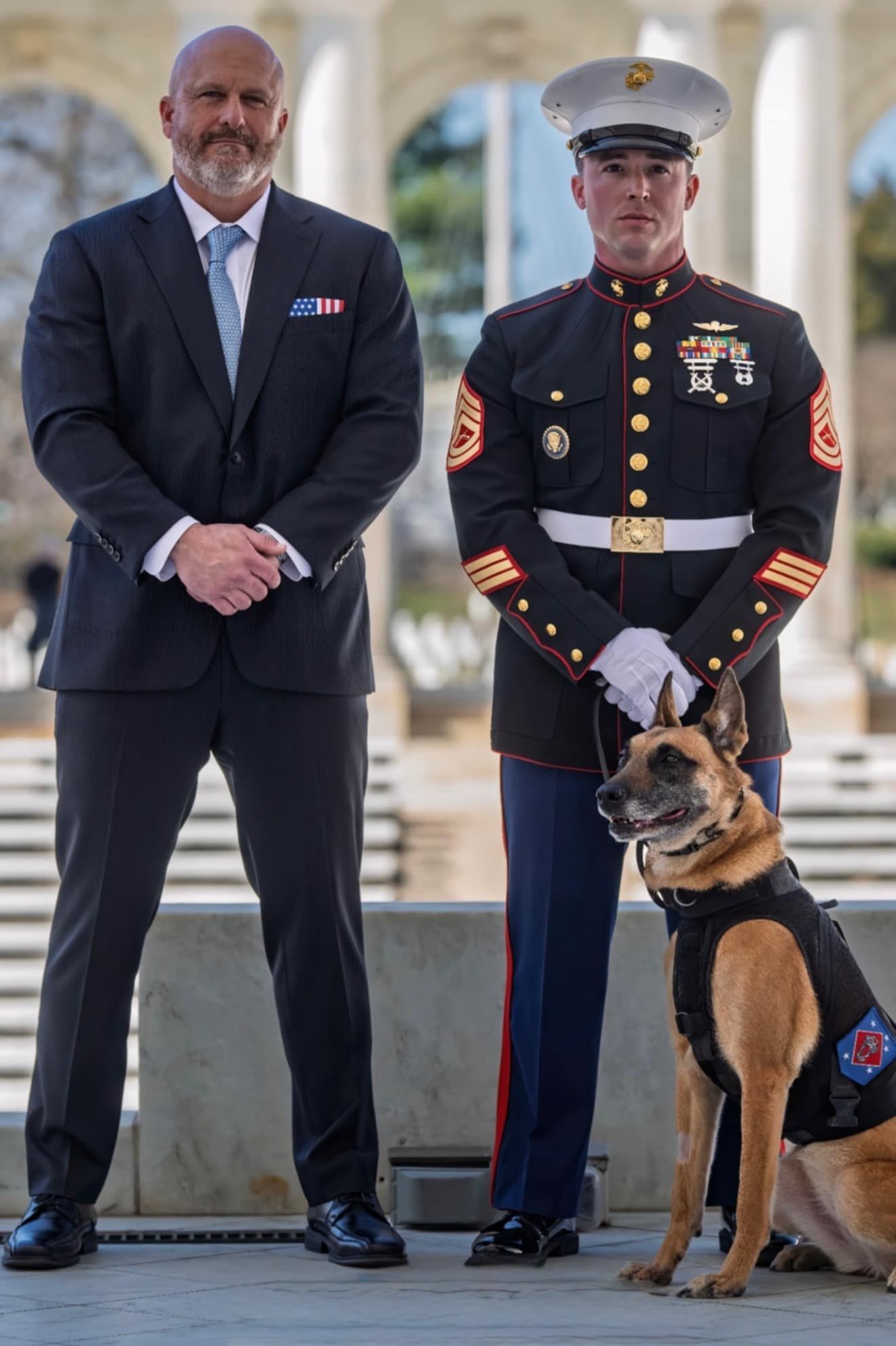

In conversation with…. US Marine Corps Dog Handler and Purple Heart Recipient, Kenneth Fischer
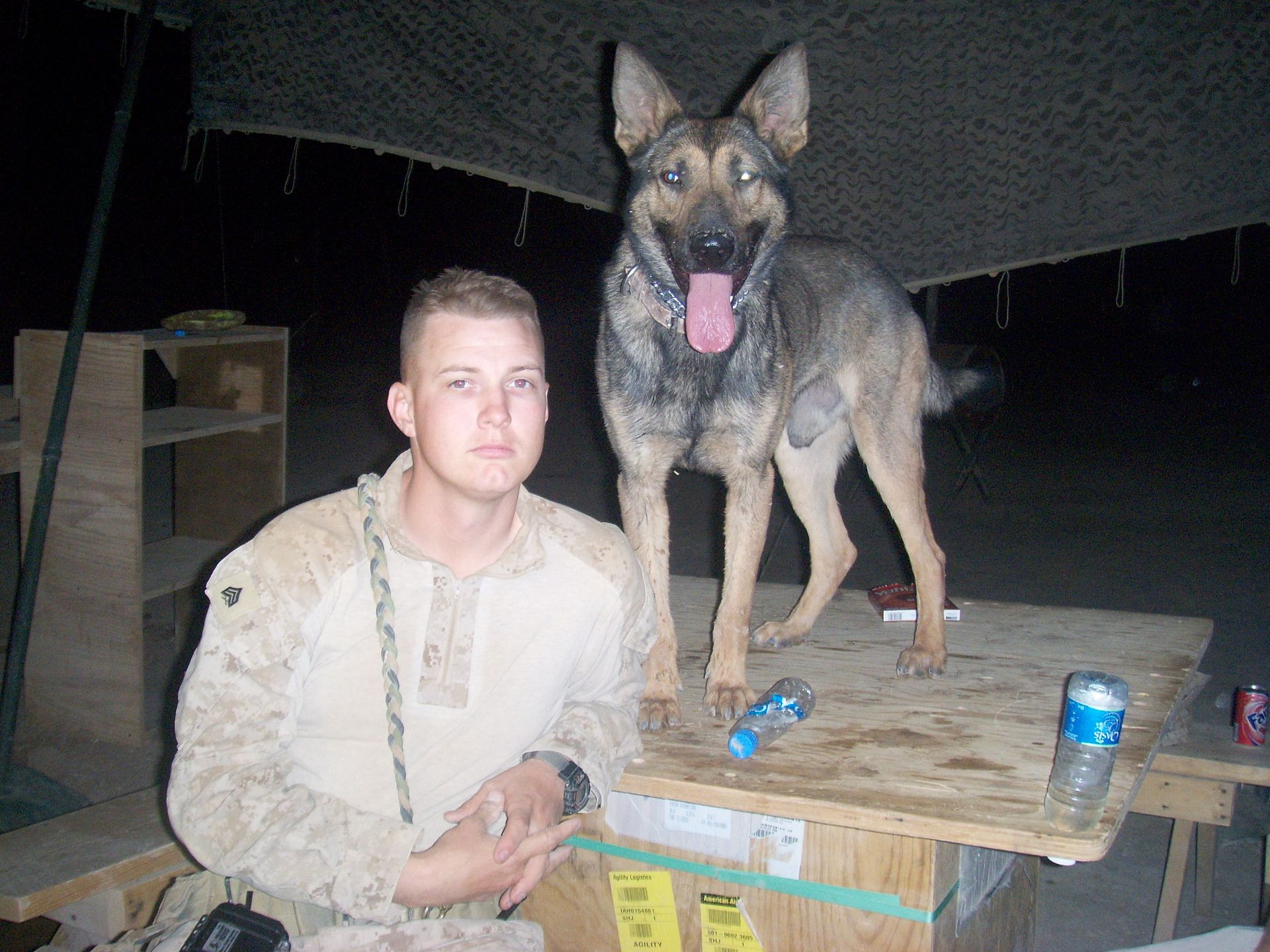
For Kenneth Fischer, joining the Marine Corps was never supposed to be a career. He enlisted in 2003 with plans to gain experience as a military police officer before pursuing a future as a game warden. Then he met a military working dog.
Discovering K-9
Kenneth’s head had been turned and as he learned more about MWDs, he also learned just how competitive the program was: ‘There were seven spots and out of 20 applicants, I was successful.’ After finishing MP school, Kenneth shipped out to Lackland where he completed his basic handlers’ course and – while enjoying some downtime out in San Antonio – met his wife of 20 years, Stephanie.
Iraq and Cindy
After graduation from Lackland, Kenneth was posted out to Marine Corps Base Kaneohe Bay, Hawaii, and it was from there that he and his 45lb Belgian Malinois, Cindy, deployed to Iraq. ‘Cindy was an explosive detection dog and when we got out beyond the wire, I really got to witness her capabilities. We had done so much training but on that deployment, I really got to understand what our impact was. I fell in love with that.
‘Cindy and I were good at what we did and I wanted to do more to support the mission, which is when my career plans changed. I was no longer just staying for four years with the Marines – I was in it for the long haul.’
Leading the Kennels
Kenneth and Cindy’s Iraq deployment ran from September 2005 to March 2006 and when he arrived home, he and Stephanie got married and PCS’d to Beaufort, SC, where Kenneth was offered a new challenge: ‘I was given the role of kennel master, which was a huge step up for an E4 corporal. In those situations, the team around you and the mentors become crucial, and I had an excellent master gunnery sergeant to support me.
The new role came with some significant responsibilities attached to it. ‘As well as training, conditioning and certifying dogs for deployment in explosive detection, we also completely overhauled our narcotics detection program, which was a critical contribution to our K-9 efforts overseas.
‘Our efforts in the kennels also caught the attention of the provost marshal, who had been known to be indifferent – at best – to the K-9 unit. But once he saw what we were achieving with the dog teams and what the dogs were capable of, he voiced his newfound respect for K-9. That was a special moment for me.’
Finding Drak
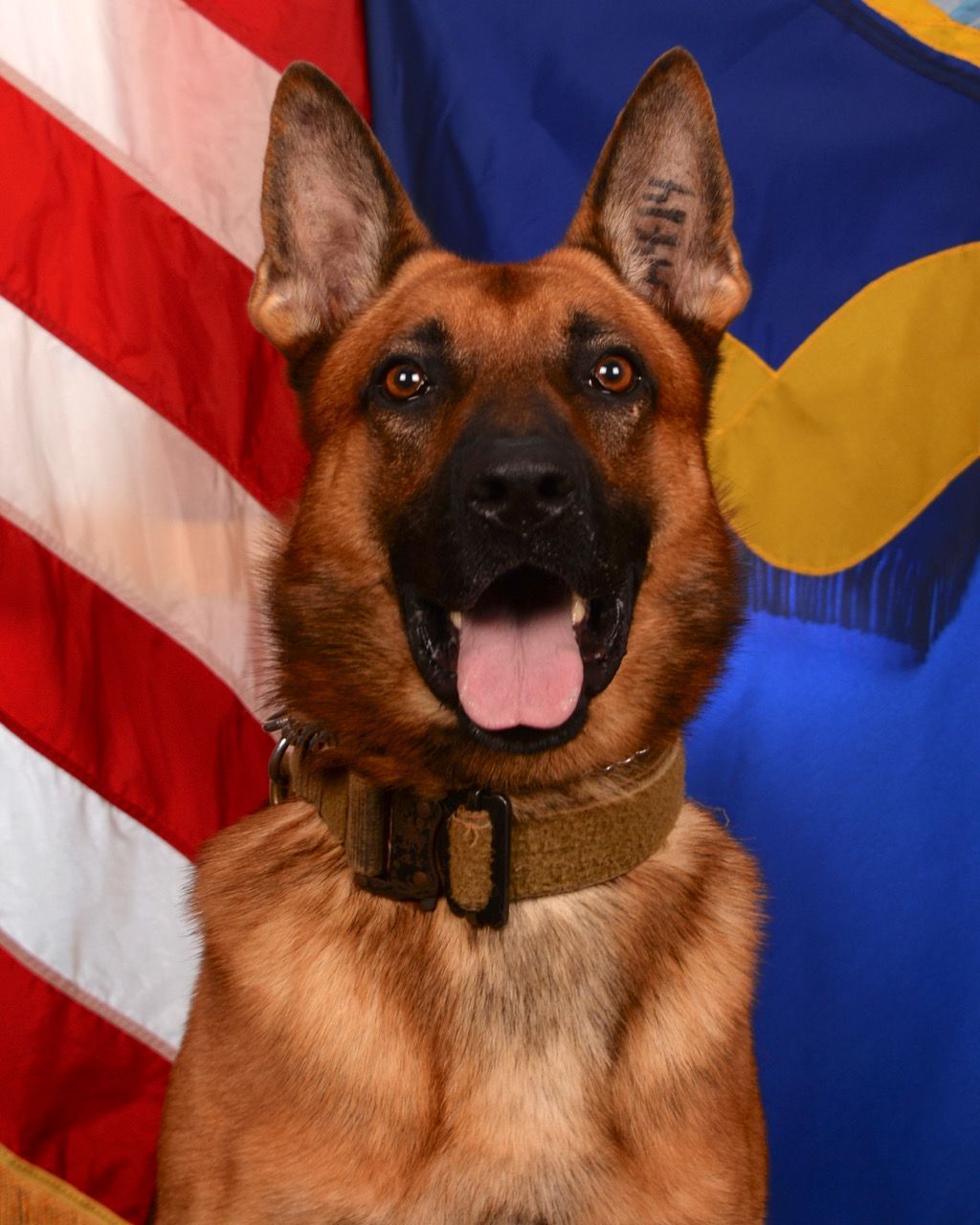
By the time he transferred to 29 Palms, Kenneth knew life was about to pivot again. ‘I got my promotion to sergeant when I transferred and was paired with MWD Drak – a narcotics detection dog.
After months of training and getting to know one another, Kenneth and Drak deployed to Afghanistan, in the February 2010. ‘This deployment hit me a little differently on a couple of levels’, Kenneth explained. ‘Firstly, my first daughter was born eight days after I arrived in country. Knowing I wouldn’t get to meet her for another half a year was tough but we had a dangerous job to do and I had to focus.
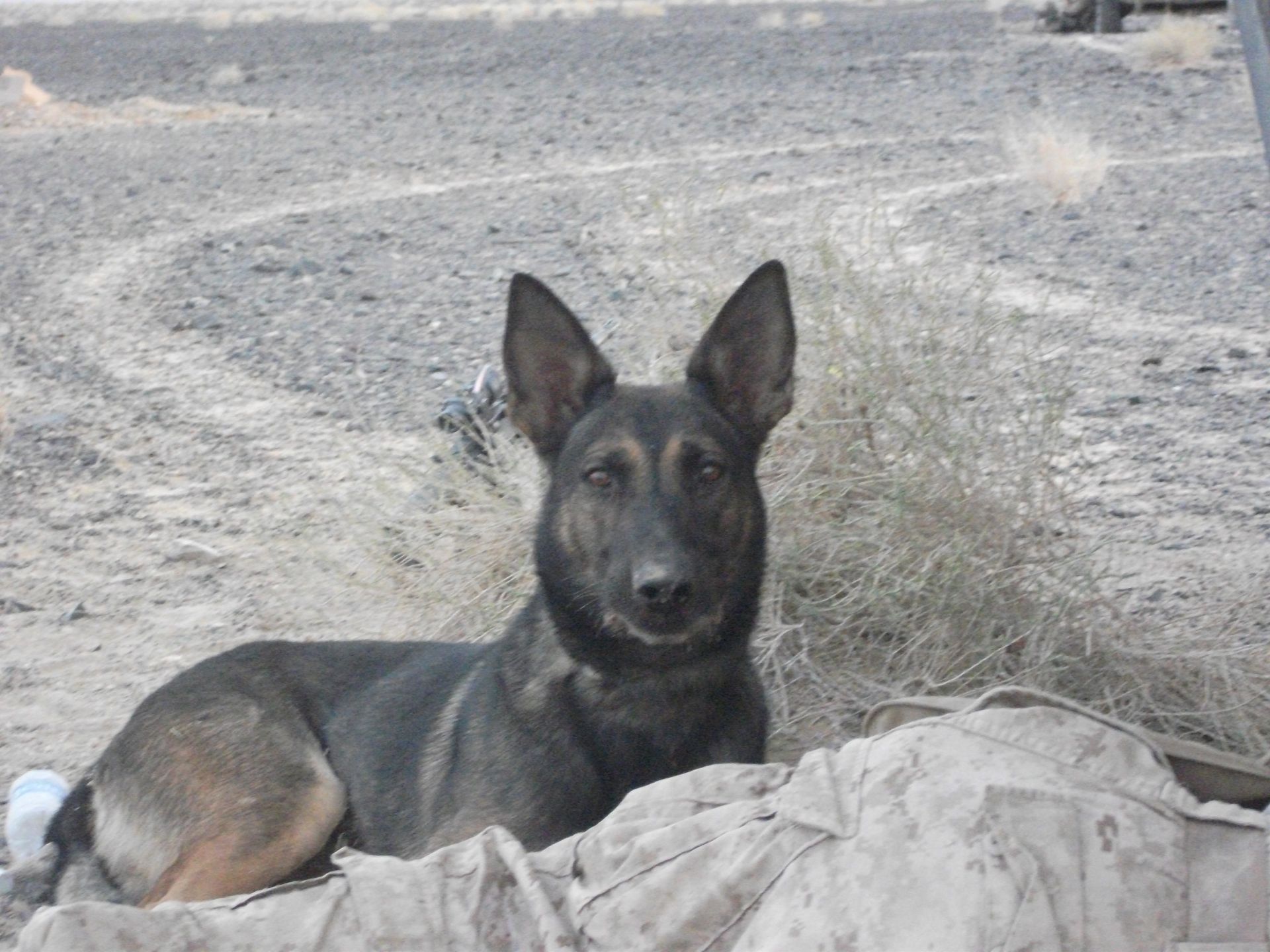
‘Second of all, this deployment was extremely busy and I didn’t feel happy being there with a drug dog – especially as a sergeant. My junior Marines all had explosive detection dogs and I felt that I should be out there with them. I mean that with no disrespect to Drak, but at that time in the war, it was my reality.’
Million Dollar Dog
Despite Kenneth’s frustrations, he was determined to spend his time and Drak’s talents to the best effect. ‘The first stumbling block we came across was that – unlike the set-up for the explosive detector dogs – there were no training aids for Drak to become familiar with the local odors he would be sniffing out.’ Kenneth set about solving this serious operational challenge.
‘I contacted the DEA at Camp Leatherneck about the issue and within a couple of days, we had access to samples of all the drugs seized locally so that I could train Drak and ready him for missions outside the wire.’
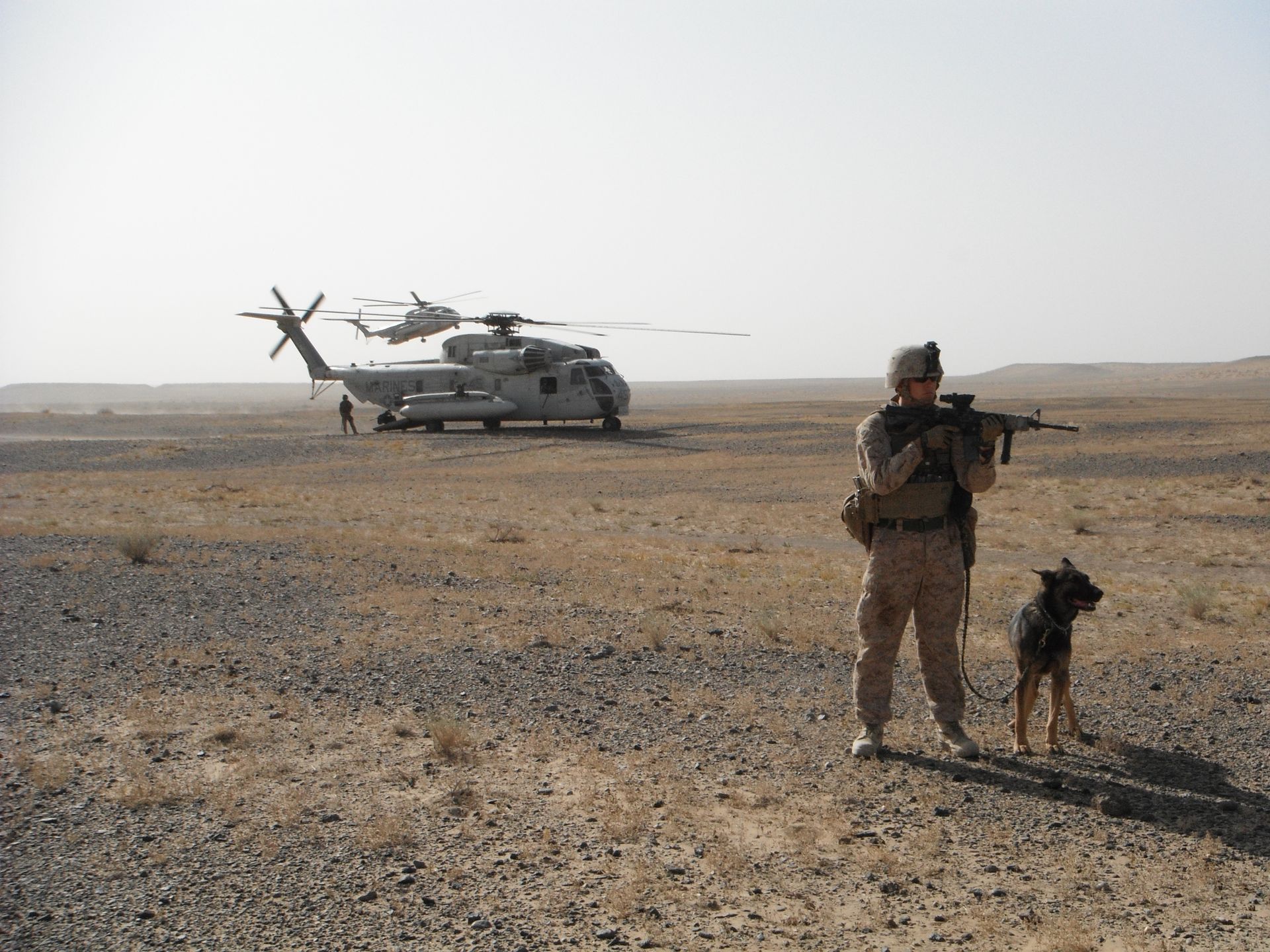
Kenneth collected dip containers from fellow Marines and painstakingly sterilised them to make the training aids for Drak. The exchange with the DEA also uncovered another interesting fact: ‘The DEA was surprised to learn that our K-9 section had narcotics detection capabilities available for operational support.’
The relationship that Kenneth had struck up with the DEA paid off – big time. Drak’s lists of finds on this deployment was nothing short of impressive. The rollcall of narcotics he found included four 50lb bags of marijuana and 10 basketball-sized packs of opium, with a street value of over $1 million. ‘That find was special’, recalls Kenneth. ‘I had to do a lot of work to convince the DEA guys to search where Drak’s behaviour changed. I requested we get closer and dig into the sand in the area. Sure enough, around 1.5 feet from the surface, we found what we were looking for.’
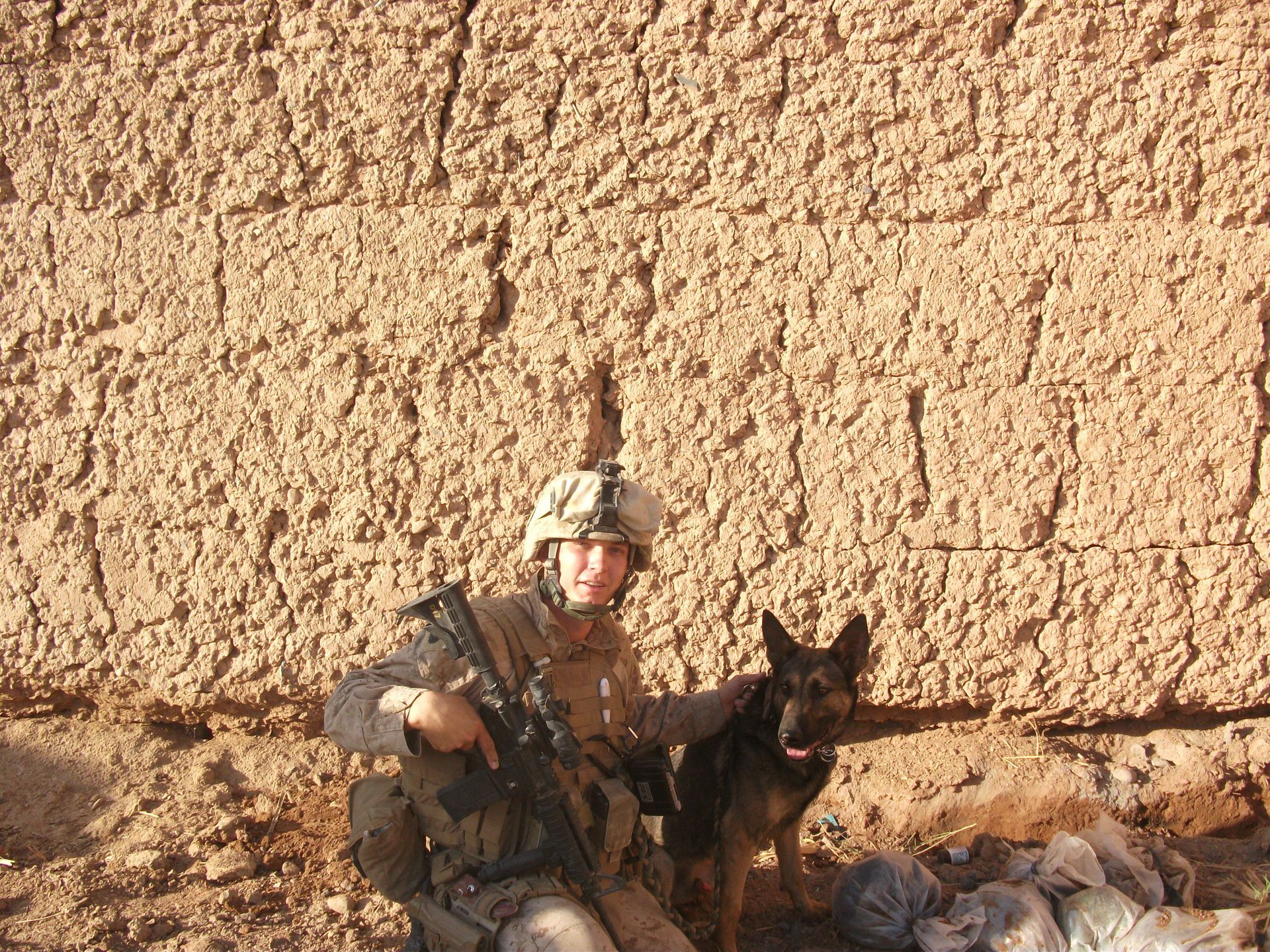
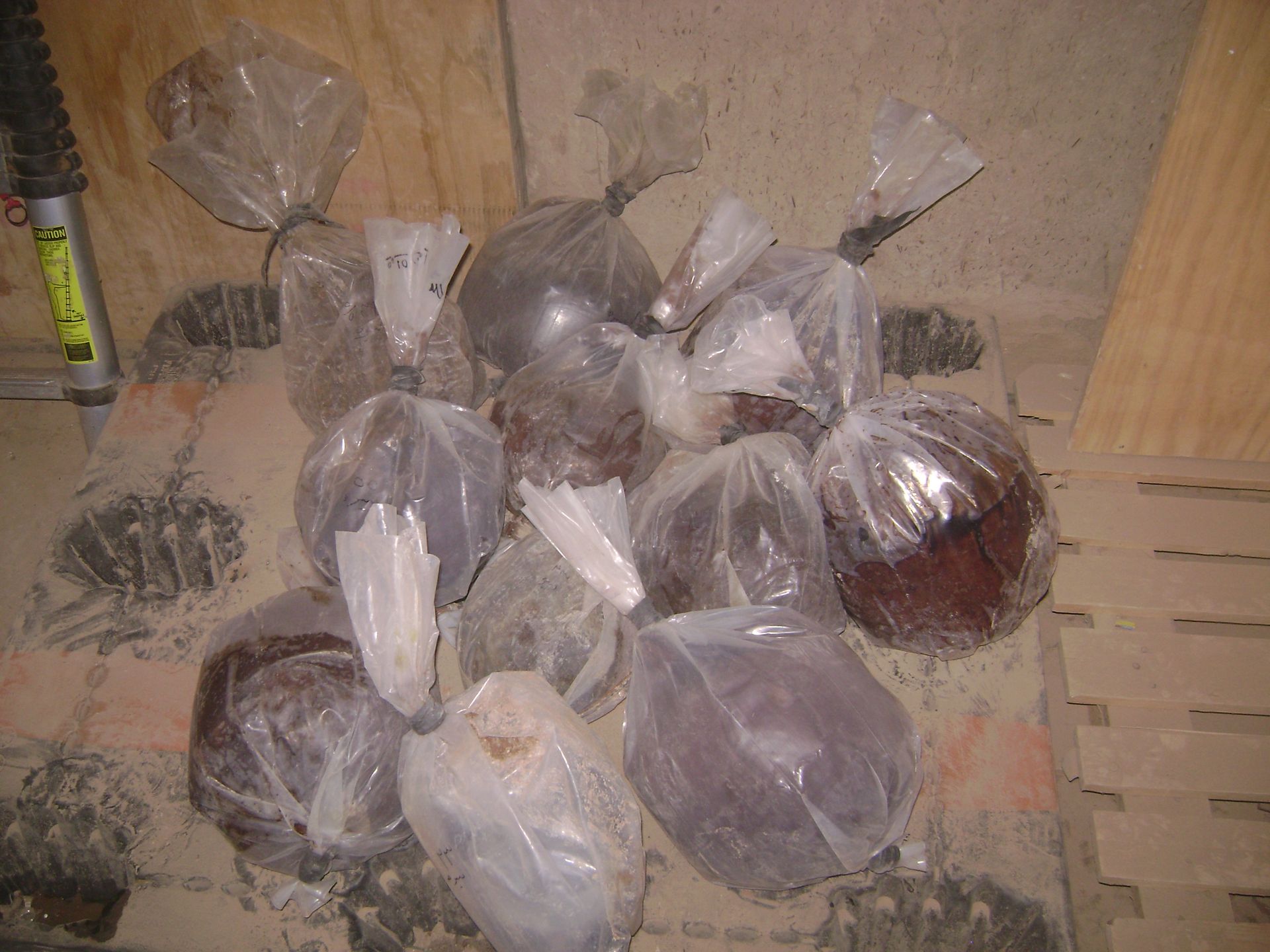
Drak’s find had a street value of over $1 million
Issue
It was on this deployment that Drak picked up an issue. ‘This period of the war was extremely kinetic and one of the bases were at came under heavy artillery fire almost every night. The outgoing artillery was so loud and caused so much vibration that it knocked display guns off the wall. Drak became very sensitive after a sustained period of being exposed to this constant noise.’ Although Drak became noise sensitive, Kenneth noted that it didn’t stop him from working or shift his focus when they were on missions. ‘He was fine around helicopters and gunfire but I had to keep him calm if we ever got into it with the enemy.’
Quick Turnaround
As with many dog teams supporting Operation Enduring Freedom, the turnaround process of coming home, resting and preparing for the next deployment, was a slick one and Kenneth and Drak were no exception.
Their second deployment to Afghanistan together (and Kenneth’s third overall) kicked off in June 2011 and this time, the dog team was not only required to provide operational support outside of the wire. ‘When we weren’t on patrols, I was requested to support with the building of a new permanent kennel facility inside Camp Dwyer.’
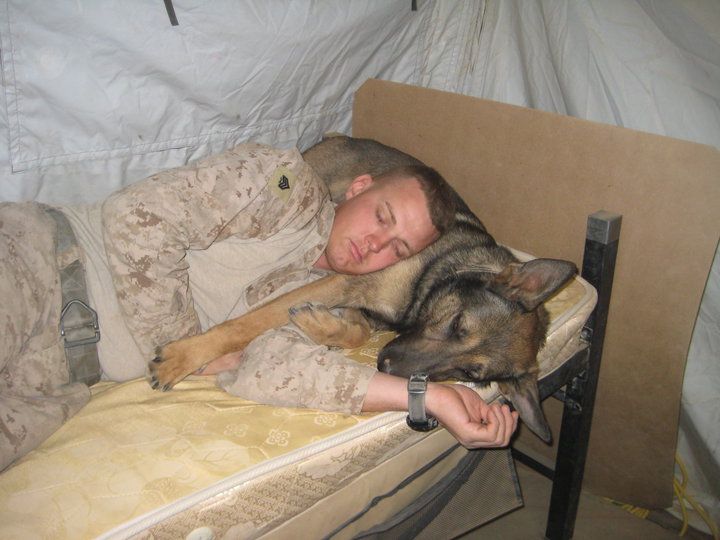
While they were outside on missions, though, the dog team quickly fell in step with the threats that were faced by allied forces from drugs being smuggled out of Afghanistan. ‘We conducted a lot of helo interdiction missions where double-prop helicopters would go out searching for vehicles that avoided checkpoints. We would land and conduct searches for contraband, which would either result in a positive find or a stern warning to go the next official checkpoint.
‘These helicopters were something else. They were large enough that we could confiscate a vehicle and load it onto the helo for impounding. It was a busy role and Drak and I quickly fell in step with the routine.’ But around halfway into the deployment, Kenneth’s kennel master asked him and Drak to move out to Sangin Province – a notorious area where vicious fighting remained rampant.
Gut
‘I felt something bad was going to happen’, explains Kenneth. ‘I had a terrible feeling. There is a lot of superstition about talking bad stuff into existence when you’re deployed but I just knew that something was going to happen.
‘I had an intense conversation with my staff sergeant about why we were being sent to that area – I asked whether I could also take a bomb dog team with me.
‘I just needed to voice that opinion and find some understanding. We had already had some heavy casualties on that deployment and in my superstition, I noticed that all the casualties’ names began with J. I thought, “They are done with J. Now it’s K’s turn.”’
Sangin
In line with his orders, Kenneth and Drak made their way to Sangin and set straight to work. ‘We arrived at 1am and after a few hours’ sleep, we were included in mission planning. Later that day, we were asked if we wanted to go on a presence patrol in a bazaar, where we met Afghan Uniform Police and had hot tea and watermelon. It was around 5:30pm at this point and after the meeting, we made the 1.5-mile walk back to the camp.
‘My head was full of what had been discussed and I was eager to get back and send an email update about what we’d learned.
‘We turned down an alley and that’s when we were hit.’
Kenneth and Drak had been hit by a car bomb.
‘My last memory before the blast was waving to three little kids. They were fascinated with how we interacted with our dogs as they are not used to it.’
Kenneth woke up on his chest. ‘I did a body check and I could feel my legs and arms. I moved to feel for Drak as I couldn’t see with all the dirt in my eyes and in pluming in the air. I needed to know where he was.’
Drak’s right leg was covered in blood.
‘A Corpsman came to my aid and quickly located a huge piece of shrapnel in my back. He called the MEDEVAC helicopter and as we were being moved, Drak’s position made it a little tricky. He had draped himself over my leg and wouldn’t budge. They managed to get him on his own stretcher and get us both out of there.’
Two images were taken of Drak by Corpsman Cpl Logan W. Pierce, in the moments that followed the blast. ‘Drak’s eyes did not leave me, even though he was in bad shape himself’, notes Kenneth.
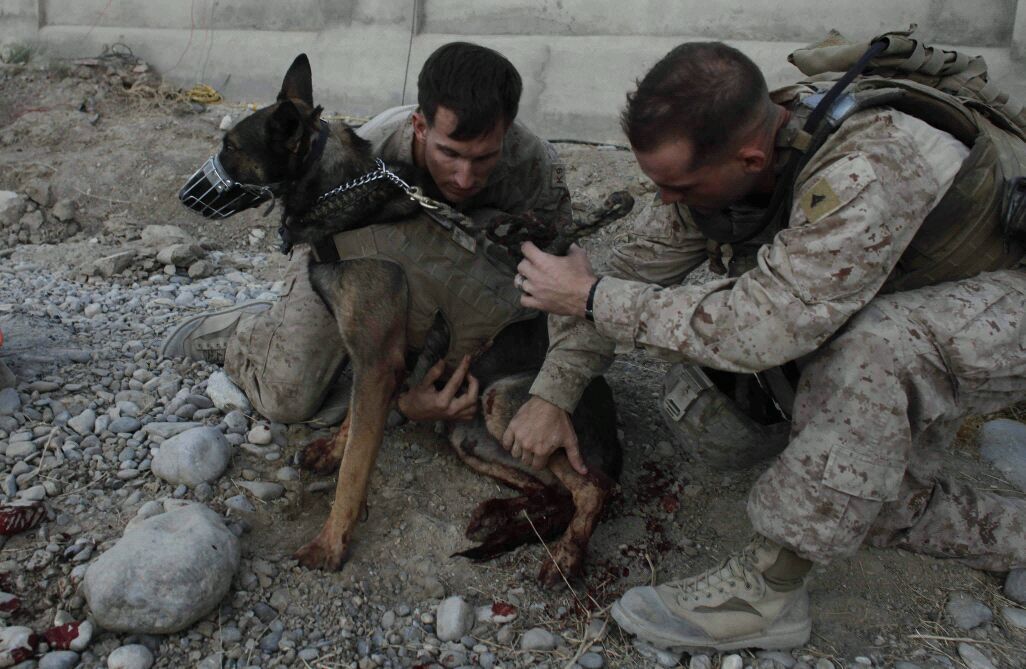
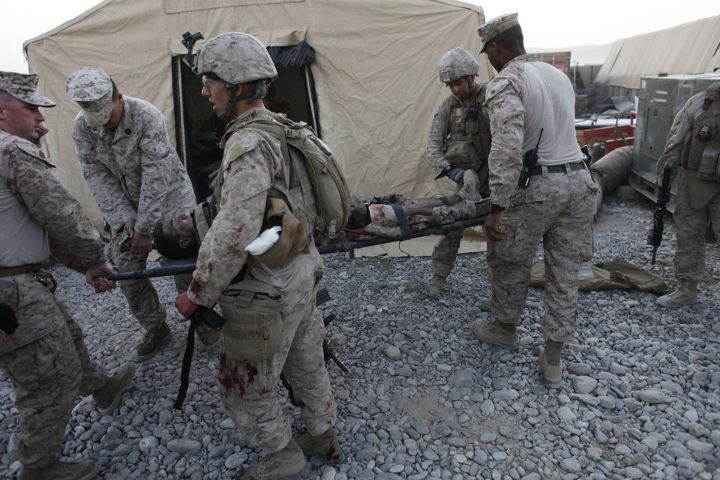
A Corpsman captured the moments after the blast that injured Kenneth and Drak
When the dog team were loaded onto the Black Hawk bound for Camp Leatherneck, Kenneth was greeted by an old friend. ‘One of my best friends and roommates in Hawaii – Mark Behl – met us and administered first aid to Drak. Of all the people to be there with me, it was crazy that it was Behl. That messed with my head – and my timeframes. Behl was able to update my wife and make sure that trustworthy information made it home.’
The blast left Kenneth with severe injuries to his right calf. The shrapnel in his back had to be removed through his chest and his injuries required him to receive 19 blood transfusions.
‘A military officer called my mom after surgery and said my fate depended squarely on my will to survive.’
Aftermath
Kenneth and Drak were injured on 8 September and after an initial surgery in country, Kenneth was flown to Germany for another surgery, before returning to the States. ‘I was flown to Walter Reed in Maryland and stayed there for a month, recovering from the injuries.’
Meanwhile, US Army veterinarian, Colonel Jim Giles was in charge of Drak’s care. Jim recalls; ‘Drak had sustained extensive projectile injuries – particularly to his hip and leg and was suffering with a lot of soft tissue damage. The first thing we did for him was to debride his wounds to prevent infection and introduced him to a new treatment at that time – that applied negative pressure to his wounds to keep them clean, which was particularly important in the dirty, dusty environment we were in.
‘Drak needed two blood transfusions and lots of pain management to keep him comfortable. He certainly had been through a lot.
‘We removed two large metal fragments from Drak during surgery – one of which had broken his pelvis. I hung onto those pieces in case I ever met his handler – it felt important to me to return those fragments to them, if the opportunity ever arose.
He recovered well with the help of the wound vac and after a few days, he was in good enough shape to travel to Dog Center Europe in Germany for further treatment.’
Jim explains that although many wounded MWDs can be a challenge, Drak was a model patient… for him, at least: ‘A lot of dogs in that state can lash out and it is especially tricky when their handlers aren’t there to help calm them down. Drak was absolutely fine with me but when he got to Germany, my fellow veterinarian Kent Vence didn’t receive the same reception. I think the word he used was ‘vicious’!’
Drak’s care in Afghanistan blazed a trail – not just for the wound vac technology that helped him to recover – but in the culture around the combat hospital in Kandahar. Jim explains: ‘Almost all the surgeries we did on the MWDs were done in a human hospital and were integrated with human care.
‘We would often invite the human medics to observe and support our K-9 surgeries. They became invested in the dogs’ stories and grew their understanding about how dogs like Drak were saving the lives of the humans in their care. That was a really special and important legacy for us.’
Home
Kenneth’s physical and mental recovery was still in the early stages while he spent time at Walter Reed. ‘Everything that had happened really started to sink in once I got back home. I spoke at length with my dad and reflected on how the Holy Spirit kept me calm through all the craziness, pain and uncertainty.’
When the time came for Kenneth to decide where he would go after his release from hospital, he recalls his thought process: ‘There really was only one answer I could give: Wherever Drak was.’
The plan was for Drak to return to Lackland Air Force Base and with Kenneth’s wife’s family in Texas, it made sense for them to relocate back to the area so that they could all have some additional support while Kenneth was recuperating.
Reunited
‘I was out of hospital before he was transferred back to Lackland. When he arrived back in the US, I explained to the vet that I was his handler and so I was able to help with his recovery on base, which was really special and not something that is easily sanctioned.
‘He arrived at Lackland in October and I retired him out in February – it took about a month for the retirement paperwork to come through. He was about five years old by then and I had been his only handler, having got him straight from the schoolhouse.’
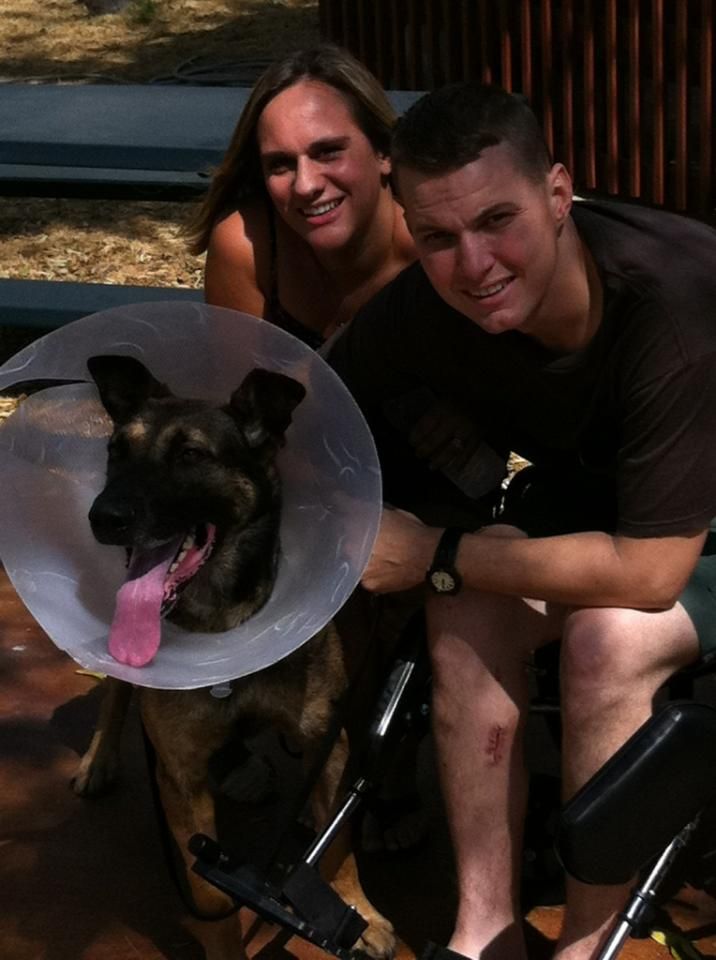
Reunited: Drak, Kenneth and his wife Stephanie
Drak’s recuperation continued at Lackland as he also had to have his tail amputated after a fracture was detected. The vet team also neutered him, ready for life in retirement.
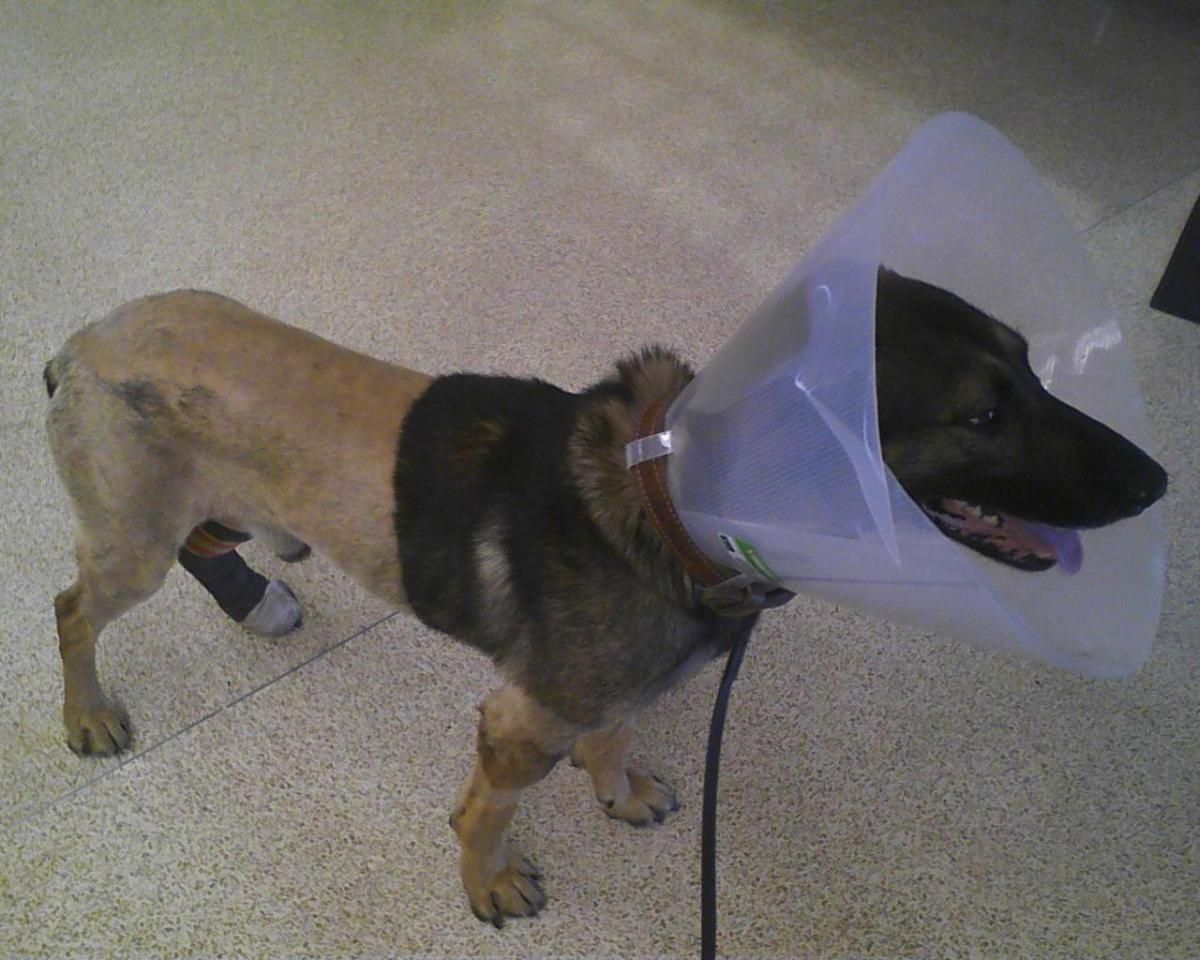
Drak’s long recovery
Drak adjusted beautifully to life with Kenneth and his family. ‘My daughter Paisley was born in September 2012 and he took to her and Cheyenne instantly. On his way home on that first day we adopted him, Cheyenne – who was a toddler at the time – was walking him around PetSmart on his leash.’
Full Circle
Drak enjoyed the very best of retirements with Kenneth and his family. ‘Amazingly, in spite of all his injuries, Drak didn’t have any permanent damage that impacted his quality of life and his personality was still the same. He still loved to do bite work as a game. His drive was still so high, even though he loved chilling out and having sofa snuggles.
‘Just as in Afghanistan, he still wasn’t a fan of loud noises so big celebrations involving fireworks were not his favorite.’
The time also came for Drak to reunite with vet Jim Giles and for his long-anticipating meeting with Kenneth. Jim explains: ‘I was invited to give a presentation on the wound vac device used in Afghanistan the incredible outcomes it had for MWDs like Drak. With Kenneth and Drak living nearby, I invited them along and we got to spend some time together.
‘I was able to return those shrapnel fragments to Kenneth, which felt like a real full circle moment.’
Drak lived in rude health and happiness with Kenneth, Stephanie, Cheyenne and Paisley until 2015, when he was diagnosed with lymphoma.
‘It was a scary time but with the help and support of Eli’s Fund at Texas A&M, Drak received the best care. They took care of the bills too, as part of the military working dog support program, which really helped us out.
‘It also happened that Colonel Giles was working out of that clinic too, so he got to oversee Drak’s care once again. The bond that he had struck with Drak at the time of his combat injuries really shone through so it felt very special to have Jim take care of Drak again.’
In spite of receiving the very best care for his cancer, Drak’s body couldn’t fight the disease. ‘He ended up with three different cancers so the awful time came for us to put an end to his suffering. It was only right that Jim was the one to put Drak to sleep. It was a heartbreaking day for all of us.’
Legacy
Kenneth’s service in the US Marine Corps and the bond he shared with Drak has continued to shape who he is. ‘The skills I acquired in the Marines, from operational planning, project management and leadership have set me up well for a fulfilled career in the civilian world. I earned a Bachelor’s degree in criminal justice and corrections and now works in the auction department for Dury’s Gun Shop in San Antonio.
‘My life changed forever on 8 September 2011, but out of the ashes of tragedy always comes light. I got to return home to my girls with Drak by my side. He helped me recover and heal and our bond will never leave my heart.
‘Finding K-9 changed the course of my life. It gave me purpose, challenged me in ways I never expected and introduced me to a partner whose loyalty never wavered. Nearly eleven years after saying goodbye to Drak, I still carry him with me every day.
‘He helped me survive war, recover from my injuries and rediscover life beyond the battlefield. Some dogs leave pawprints on your heart. Drak left his on my soul.’
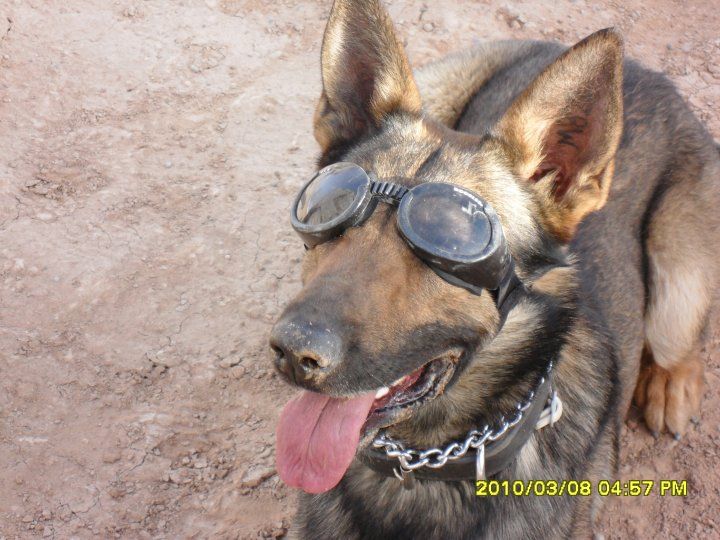
Thank you for your service, Drak